Problem-first troubleshooting
We track the failure to its source—electrical, airflow, controls, or refrigerant-side—and explain the evidence so the repair makes sense.
Serving Naperville, Illinois & surrounding areas
24/7 Emergency Response
Air conditioner service · Naperville, IL
When your AC quits or can't keep up, we troubleshoot fast, explain the fix in plain language, and get reliable cooling back without guesswork.
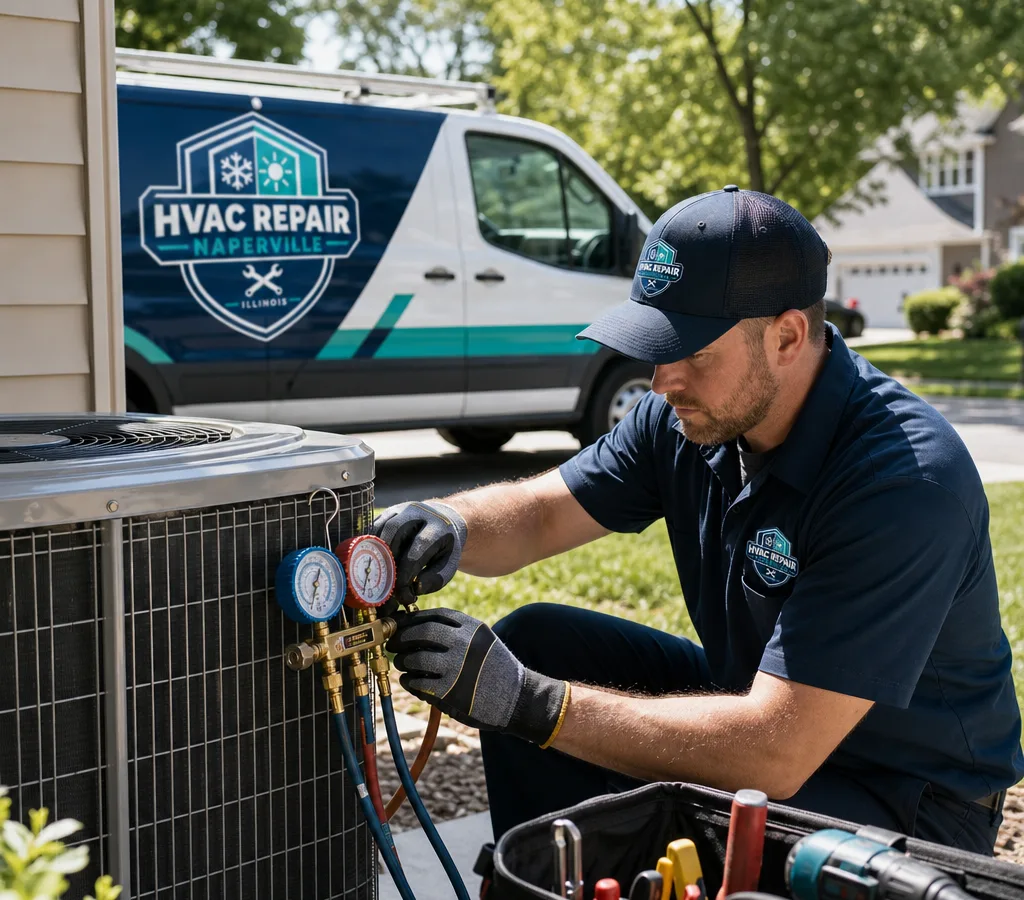
Accurate cooling diagnostics
If you searched for air conditioner repair Naperville, you probably have one problem: the house isn't cooling like it should. HVAC Repair Naperville handles residential air conditioning repairs across Naperville, IL, including no-cool calls, weak airflow, freezing coils, loud units, and thermostats that don't seem to match what the system is doing.
In the Chicago western suburbs, hot and humid stretches can push an AC system hard for days at a time. That's when small issues, like low refrigerant from a leak, a failing capacitor, or a dirty outdoor coil, turn into a full shutdown. Our job is to find the actual cause, not just get it running for an hour.
You'll get a clear explanation of what failed, what needs to be replaced or corrected, and what we recommend to reduce the chance of the same breakdown happening again. For homeowners near Downtown Naperville's older homes and tighter mechanical spaces, and for newer builds near Route 59 where systems often run long cycles in open floor plans, we adapt the diagnostic approach to the equipment layout and the way the home is used.
For a broader look at heating and cooling help year-round, many customers start with HVAC repair in Naperville and then book the specific service they need.
Electrical, airflow and refrigerant checks
Most air conditioning problems fall into a few repeatable failure patterns. We start with the basics that prevent wasted time: confirm thermostat signals, verify airflow, check electrical components, then test refrigeration performance.
Common AC repair items include:
For air conditioning repair in Naperville IL, accurate diagnosis matters because the symptom—warm air—can come from electrical, airflow, or refrigerant-side faults. We document what we find and confirm operation after the repair, including temperature split and stable system cycling.
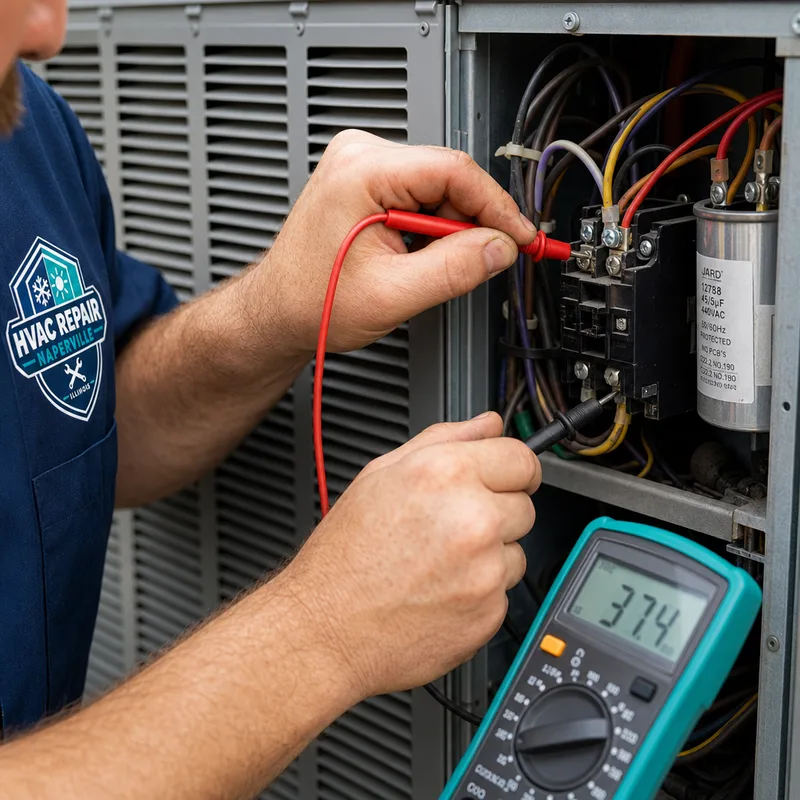
A clear AC repair experience
We track the failure to its source—electrical, airflow, controls, or refrigerant-side—and explain the evidence so the repair makes sense.
You'll know what we're replacing or correcting, why it failed, and what the next steps are before any repair is performed.
For big-ticket items like motors, boards, or leak-related refrigerant issues, we walk through practical options so you can choose the right path.
We protect the work area, keep the job tidy around the air handler or furnace cabinet, and confirm the system is operating normally before we leave.
After the fix, we point out the specific conditions that led to the failure—restricted filter, blocked coil, or failing electrical part—so you can avoid a return visit.
From symptom to tested repair
We ask what you're seeing—no cool, short-cycling, icing, noise, or high indoor humidity—when it started, and whether anything changed recently.
We verify safe power, inspect disconnects and wiring, and test common failure points like contactors, capacitors, and fuses when applicable.
We inspect the filter, returns, blower operation, and coil condition, then measure supply and return temperatures to confirm whether the system is moving and cooling air.
If performance points to a refrigerant issue, we take pressures and temperatures and look for signs of a leak or restriction. We explain what the readings mean before recommending a repair.
After completing the approved repair, we run the system through a normal cycle, confirm stable operation, and share practical guidance for preventing the same issue.
Repair cost guidance
Air conditioner repair in Naperville typically runs about $200 to $900+, depending on what failed and how long diagnostics take. Smaller electrical repairs, like a capacitor or contactor, often land on the lower end, while blower motors, control boards, or refrigerant leak-related work can push higher.
Final pricing changes with parts availability for your model, access to the equipment—attic, crawlspace, or tight closets—the condition of coils and wiring, and whether the issue is intermittent. The exact cost is confirmed after on-site troubleshooting and a written scope of work.
If your home won't cool or your AC is making new noises, get a technician out to diagnose it before the problem turns into compressor damage or repeated shutdowns.
Call for a Free QuoteCommon cooling questions
Same-day availability depends on the day's schedule and demand during heat waves, but we prioritize no-cool situations when possible. If you reach out with your symptoms—no cool, short cycling, ice on the lines, or a burning smell—we'll set expectations up front and dispatch the soonest opening that fits.
It can be either, and the right answer comes from measurements, not guesses. A dirty outdoor coil, clogged filter, or blocked return can reduce capacity, but so can a weak capacitor, failing fan motor, or low refrigerant from a leak. During the visit we check airflow and temperature split first, then move into electrical and refrigerant diagnostics as needed.
The most common causes are electrical: a failed capacitor, bad contactor, tripped breaker, blown fuse on some systems, or a thermostat or control issue. We verify safe power, test start components, and confirm the control signal so we can fix the actual point of failure instead of swapping parts blindly.
No. Ice is a sign the coil temperature dropped below freezing, usually from low airflow or low refrigerant. In Naperville's humid summers, a partially restricted filter or return can tip a system into icing, and continuing to run it can damage the compressor. We'll shut it down as needed, correct the cause, and confirm normal operation afterward.
We can, but we'll first address why it is low and what that means long-term. Refrigerant doesn't get used up in a sealed system, so low charge often points to a leak. We'll explain your options for leak finding and repair versus temporary recharge based on the system condition and your goals.
Start with consistent airflow and clean heat transfer: replace filters on schedule, keep supply and return vents open, and keep the outdoor condenser clear of cottonwood fluff and debris. If you've had repeat issues, a diagnostic-focused visit can also identify early warning signs like a weak capacitor, overheating electrical connections, or a struggling fan motor.
Schedule your AC diagnostic
Tell us what your system is doing and when it started. We'll schedule a diagnostic visit in Naperville, pinpoint the cause, and lay out the repair options clearly so you can get your comfort back.